
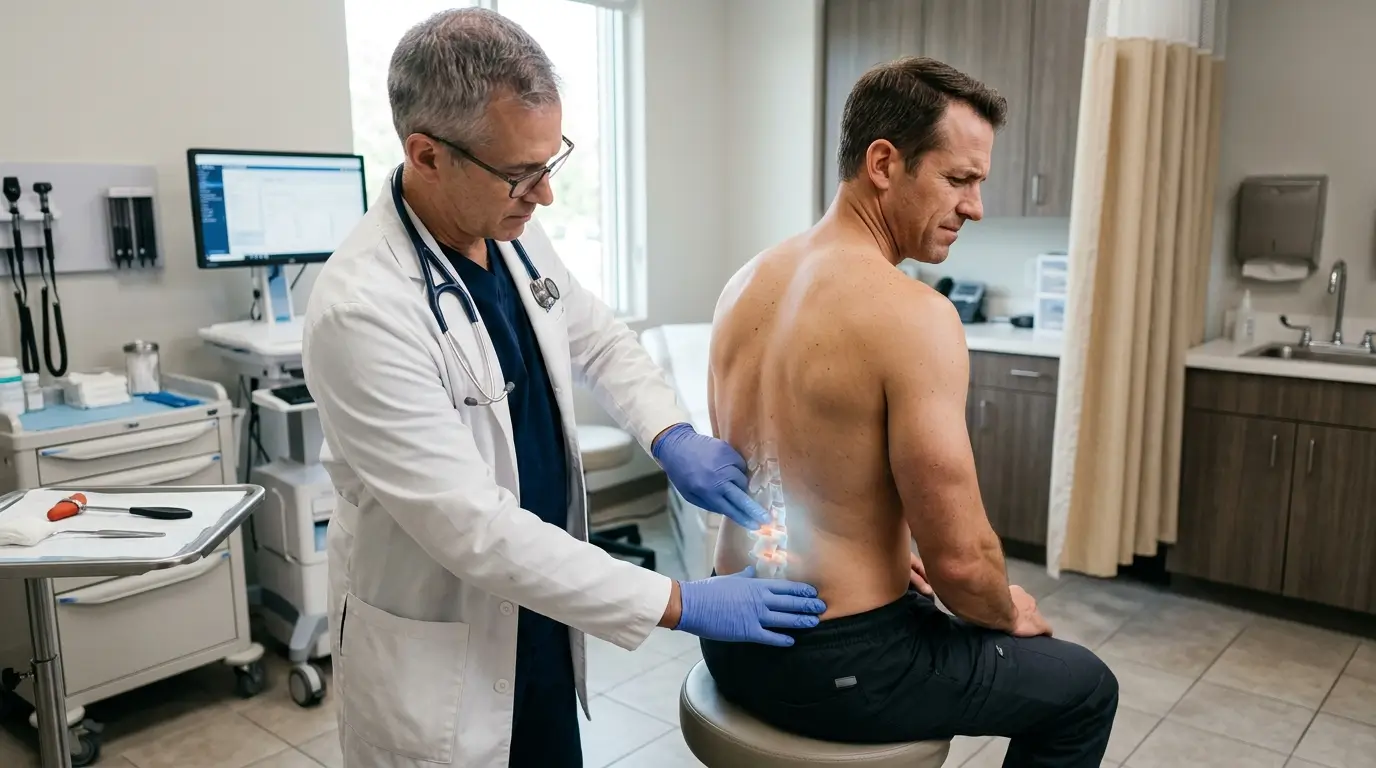
A herniated disc occurs when one of the discs between the vertebrae of the spine protrudes outward, putting pressure on the surrounding nerves. These discs act as cushions between the vertebrae and absorb shocks, and when a disc slips, it can cause severe pain, numbness, and muscle weakness, affecting normal movement. Herniated discs can occur anywhere along the spine, including the neck, back, hip, or coccyx, with symptoms varying depending on the location.
Herniated discs are one of the most common spinal problems, and early recognition of symptoms helps ensure proper diagnosis and effective treatment to prevent complications.
Statistics and Prevalence of Herniated Discs
Studies show that herniated discs affect a large percentage of adults, especially with aging:
-
Around 60% of adults will experience lower back pain related to a herniated disc at some point in their lives.
-
Cervical herniated discs (neck) are less common than lumbar herniations but can cause significant neck and arm problems.
-
Men are more prone to herniated discs between the ages of 30 and 50, while women may be more affected after menopause due to weaker bones and muscles.
Cervical Herniated Disc Symptoms
Herniated discs in the neck often cause:
-
Severe neck and shoulder pain.
-
Frequent headaches starting at the base of the skull.
-
Numbness or tingling in the hands and fingers.
-
Weakness in hand strength or difficulty grasping objects.
Neck Disc Herniation Symptoms
This type is closely related to cervical herniation and may also include:
-
Pain radiating from the neck to the shoulder or arm.
-
Difficulty moving the neck or turning the head.
-
Burning sensation or tingling in the upper limbs.
-
In severe cases, muscle weakness and poor hand coordination.
Back Herniated Disc Symptoms
Herniated discs in the thoracic or lumbar spine can cause:
-
Pain concentrated in the mid or lower back.
-
Pain that worsens with movement or bending.
-
Tingling or numbness in the legs.
-
Weakness in lower back or leg muscles in advanced cases.
Hip Herniated Disc Symptoms
Herniated discs in the hip region may cause:
-
Pain radiating from the lower back to the hips and buttocks.
-
Difficulty walking or sitting for long periods.
-
Tingling or numbness in the legs.
-
Muscle spasms around the hip and thigh.
Coccyx Herniated Disc Symptoms
When the herniation affects the coccyx, the symptoms include:
-
Sharp pain when sitting or transitioning from sitting to standing.
-
Pain sometimes radiating to the buttocks or upper thighs.
-
Discomfort when pressure is applied to the lower spine.
General Spine Herniated Disc Symptoms
Herniated discs along the spine may generally include:
-
Persistent or intermittent pain in the back or neck depending on the location.
-
Weakness or numbness in the upper or lower limbs.
-
Difficulty bending or moving.
-
In severe cases, loss of bladder or bowel control.
Conclusion
Herniated disc symptoms vary depending on the location and the degree of nerve compression. Recognizing symptoms early, seeking medical care promptly, and following proper treatment plans can help reduce complications and improve quality of life, whether through physical therapy, medications, or surgical intervention in severe cases.
Frequently Asked Questions (FAQ)
Q: Can a herniated disc heal without surgery?
A: Yes, most cases can be managed with physical therapy and medications, but severe cases may require surgical intervention.
Q: When should I see a doctor immediately?
A: Seek immediate medical attention if you experience severe persistent pain, significant numbness or weakness in the limbs, or loss of bladder or bowel control.
Q: Does a herniated disc cause permanent numbness?
A: Numbness is usually temporary and improves with treatment, but if severe cases are left untreated, it may become persistent.
Q: Is a herniated disc hereditary?
A: Some genetic factors may increase susceptibility to disc weakness, but lifestyle and posture play a major role.
Suggested Articles

Locations of Spinal Cord Injuries
Hand Nerve Compression – Causes, Symptoms, and Treatment

Trigeminal Neuralgia Symptoms: Key Signs & Relief Options
Vertebroplasty: Reasons, procedures and expectations
