
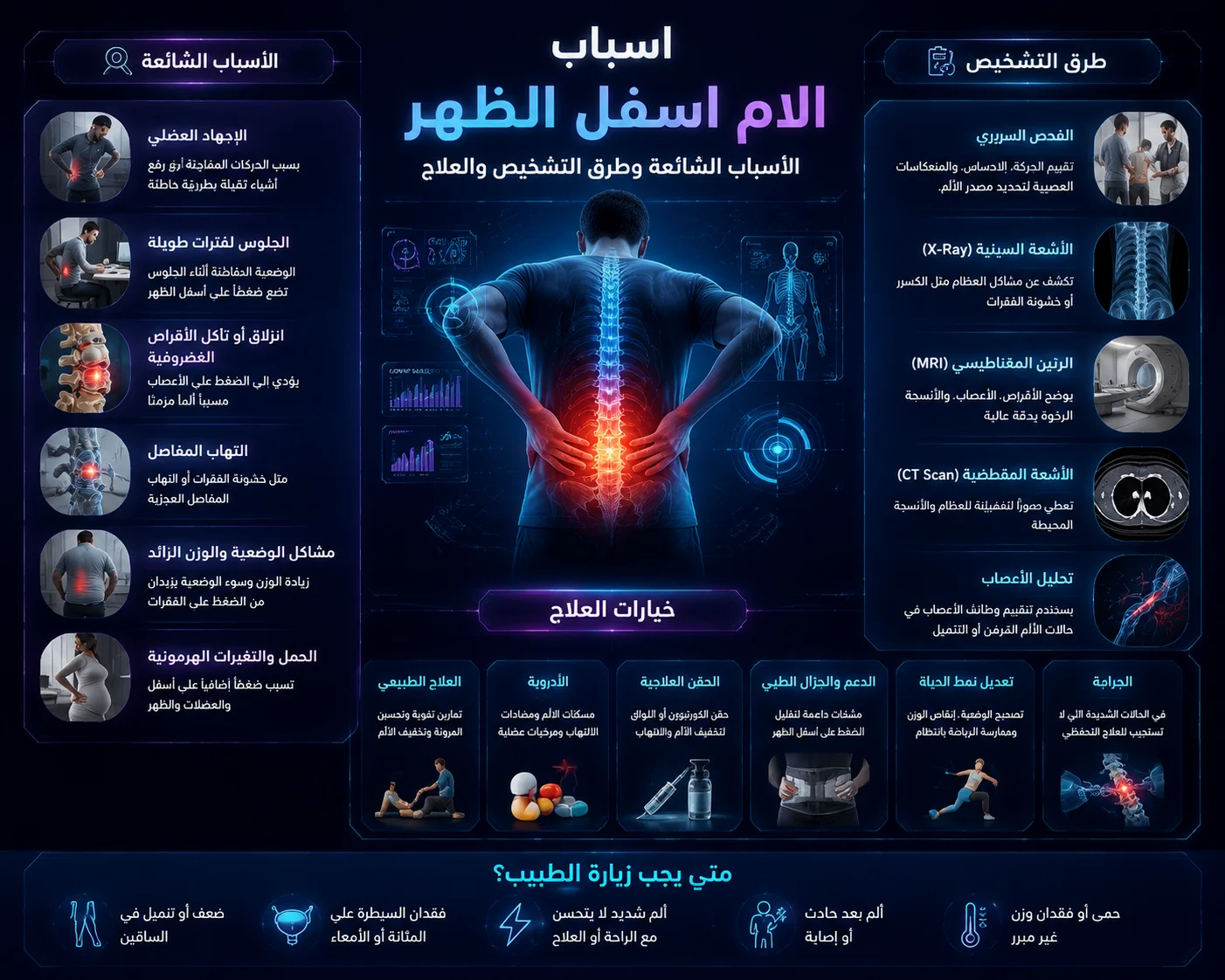
Lower back pain is one of the most common health problems affecting people of different ages. It can result from simple causes such as muscle strain and poor posture, or it may be related to conditions affecting the spine, discs, or nerves. Understanding the causes of lower back pain is an important step toward choosing the right treatment and preventing the condition from becoming worse.
The severity and type of pain can vary from one person to another. Some people experience temporary discomfort after physical activity, while others may suffer from chronic pain that affects movement and daily activities. Early diagnosis helps identify the actual cause and determine the most suitable treatment plan.
What Are the Most Common Causes of Lower Back Pain?
There are many possible reasons behind lower back pain, and the cause may differ depending on a person’s lifestyle, age, physical activity, and medical history. In many cases, the pain is related to muscles, ligaments, joints, or spinal structures.
Common causes of lower back pain include:
-
Muscle strain caused by lifting heavy objects or sudden movements.
-
Poor sitting or standing posture.
-
Herniated discs that put pressure on spinal nerves.
-
Spinal canal narrowing.
-
Spine injuries or fractures.
-
Age-related changes affecting the vertebrae.
A proper diagnosis requires evaluating symptoms and performing a medical examination. In some cases, doctors may recommend imaging tests such as X-rays or MRI scans to identify the exact source of the pain.
Sudden Lower Back Pain Causes
Sudden lower back pain causes are often related to unexpected movements, physical effort, or injuries that affect the muscles and structures supporting the spine. Many people experience sudden pain after lifting something heavy, twisting incorrectly, or performing intense activity without proper preparation.
Common causes include:
-
Sudden muscle or ligament strain.
-
Incorrect lifting techniques.
-
Sports-related injuries.
-
Irritation of spinal joints or nerves.
However, sudden severe pain should not always be ignored. Medical evaluation is recommended if the pain is intense, continues for a long time, or appears with warning signs such as numbness, weakness, or difficulty controlling bladder or bowel movements.
Early assessment helps determine whether the problem is temporary muscle irritation or a condition requiring specialized treatment.
Lower Back Pain After Waking Up: Why Does It Happen?
Many people experience discomfort in their lower back when they wake up in the morning. Lower back pain after waking up can occur because of sleeping positions, unsuitable mattresses, or stiffness in muscles after several hours of inactivity.
Possible causes include:
-
Sleeping in a position that increases pressure on the lower back.
-
Lack of proper spine support during sleep.
-
Weak back and abdominal muscles.
-
Degenerative changes in spinal joints.
-
Inflammatory conditions affecting the spine.
If morning back pain happens regularly or becomes worse over time, it is important to consult a spine specialist. Persistent pain may indicate an underlying issue that requires proper evaluation and treatment.
Causes of Lower Back Pain in Women
The causes of lower back pain in women can vary depending on age, lifestyle, and health conditions. While many cases are related to muscles and the spine, some women may experience back pain due to hormonal changes or conditions related to pregnancy and reproductive health.
Common causes include:
-
Menstrual-related back discomfort.
-
Pregnancy-related changes.
-
Weak pelvic and back muscles.
-
Disc problems.
-
Spinal joint issues.
Women should pay attention to persistent or unusual pain, especially when it is accompanied by other symptoms. A proper medical assessment helps distinguish normal discomfort from conditions that require specialized care.
Lower Back Pain During Pregnancy: Causes and Relief
Lower back pain during pregnancy is very common due to the physical changes that happen throughout pregnancy. As the baby grows, additional pressure is placed on the lower back and pelvic area. Hormonal changes also affect the ligaments that support the spine.
Common reasons include:
-
Increased body weight and pressure on the spine.
-
Changes in posture to maintain balance.
-
Relaxation of supporting ligaments.
-
Increased stress on back and pelvic muscles.
Pregnant women can often reduce discomfort by maintaining proper posture, avoiding heavy lifting, using supportive sleeping positions, and performing pregnancy-safe exercises after consulting their doctor.
Severe or unusual pain during pregnancy should always be evaluated by a healthcare professional.
Causes of Lower Back Pain in Men
The causes of lower back pain in men are often related to physical activity, work demands, and lifestyle habits. Men who perform heavy physical tasks or spend long hours sitting may have a higher risk of developing back problems.
Common causes include:
-
Muscle strain from physical effort.
-
Lumbar disc problems.
-
Spine injuries.
-
Long periods of sitting.
-
Lack of physical activity and weak muscles.
Many men delay seeking medical advice, assuming the pain will disappear on its own. However, continuous pain may indicate a problem involving the discs, nerves, or vertebrae, making early evaluation important.
Lower Back Pain When Sitting: Causes and Prevention
Sitting for long periods is one of the most common factors contributing to lower back discomfort. Lower back pain when sitting often happens because prolonged sitting increases pressure on the lumbar spine, especially when the sitting position is incorrect.
Common causes include:
-
Poor sitting posture.
-
Lack of lower back support.
-
Limited movement during the day.
-
Weak core muscles.
To reduce discomfort, experts recommend maintaining proper sitting posture, using supportive chairs, taking regular movement breaks, and avoiding staying in one position for extended periods.
Simple lifestyle changes can significantly reduce stress on the lower back.
Right and Left Side Lower Back Pain Causes
Some people experience pain on only one side of the lower back, either the right or left side. The reason may be related to muscles, joints, nerves, or other structures around the spine.
Possible right side lower back pain causes and left side lower back pain causes include:
-
Muscle strain affecting one side of the back.
-
Nerve irritation.
-
Joint inflammation.
-
Lumbar spine problems.
Pain that spreads down the leg, causes tingling, or leads to weakness may indicate nerve involvement, such as pressure caused by a disc problem. A specialist can determine the exact cause through examination and appropriate diagnostic tests.
When Should You See a Doctor for Lower Back Pain?
Many cases of lower back pain improve with proper rest and conservative treatment. However, some symptoms require medical evaluation, especially when they indicate possible nerve or spine problems.
You should consult a spine specialist if you experience:
-
Severe pain that does not improve.
-
Persistent pain lasting several weeks.
-
Numbness or weakness in the legs.
-
Loss of bladder or bowel control.
-
Pain following a major injury.
A correct diagnosis is the first step toward effective treatment. Depending on the condition, treatment may include medication, physical therapy, injections, or minimally invasive spine procedures.
Get Expert Diagnosis for Your Lower Back Pain with Dr. Mohamed Abd Elbary
If you are experiencing persistent lower back pain or symptoms related to the spine and nerves, accurate diagnosis is essential to determine the best treatment option. Dr. Mohamed Abd Elbary’s Brain and Spine Center in Alexandria provides specialized care for spine conditions using advanced diagnostic methods and modern treatment techniques.
With extensive experience in minimally invasive spine procedures, the center focuses on identifying the exact cause of pain and providing personalized treatment plans based on each patient’s condition.
Book your appointment today to receive a professional evaluation and take the first step toward effective back pain management.
Frequently Asked Questions About Lower Back Pain Causes
What is the most common cause of lower back pain?
The most common causes include muscle strain, poor posture, heavy lifting, and prolonged sitting. However, some cases may be related to spinal discs or nerve problems.
Does lower back pain always mean I have a slipped disc?
No. Many cases are caused by muscle strain or posture problems. A slipped disc is more likely when pain is accompanied by leg numbness, weakness, or shooting pain.
Why does my lower back hurt after waking up?
Morning lower back pain may result from sleeping position, mattress support issues, muscle stiffness, or underlying spine conditions.
Is lower back pain common during pregnancy?
Yes, lower back pain is common during pregnancy because of weight changes, hormonal effects, and increased pressure on the spine.
When is lower back pain considered serious?
Lower back pain requires medical attention when it is severe, persistent, follows an injury, or is associated with weakness, numbness, or bladder and bowel problems.
Suggested Articles

Locations of Spinal Cord Injuries
Hand Nerve Compression – Causes, Symptoms, and Treatment

Trigeminal Neuralgia Symptoms: Key Signs & Relief Options
Vertebroplasty: Reasons, procedures and expectations
