
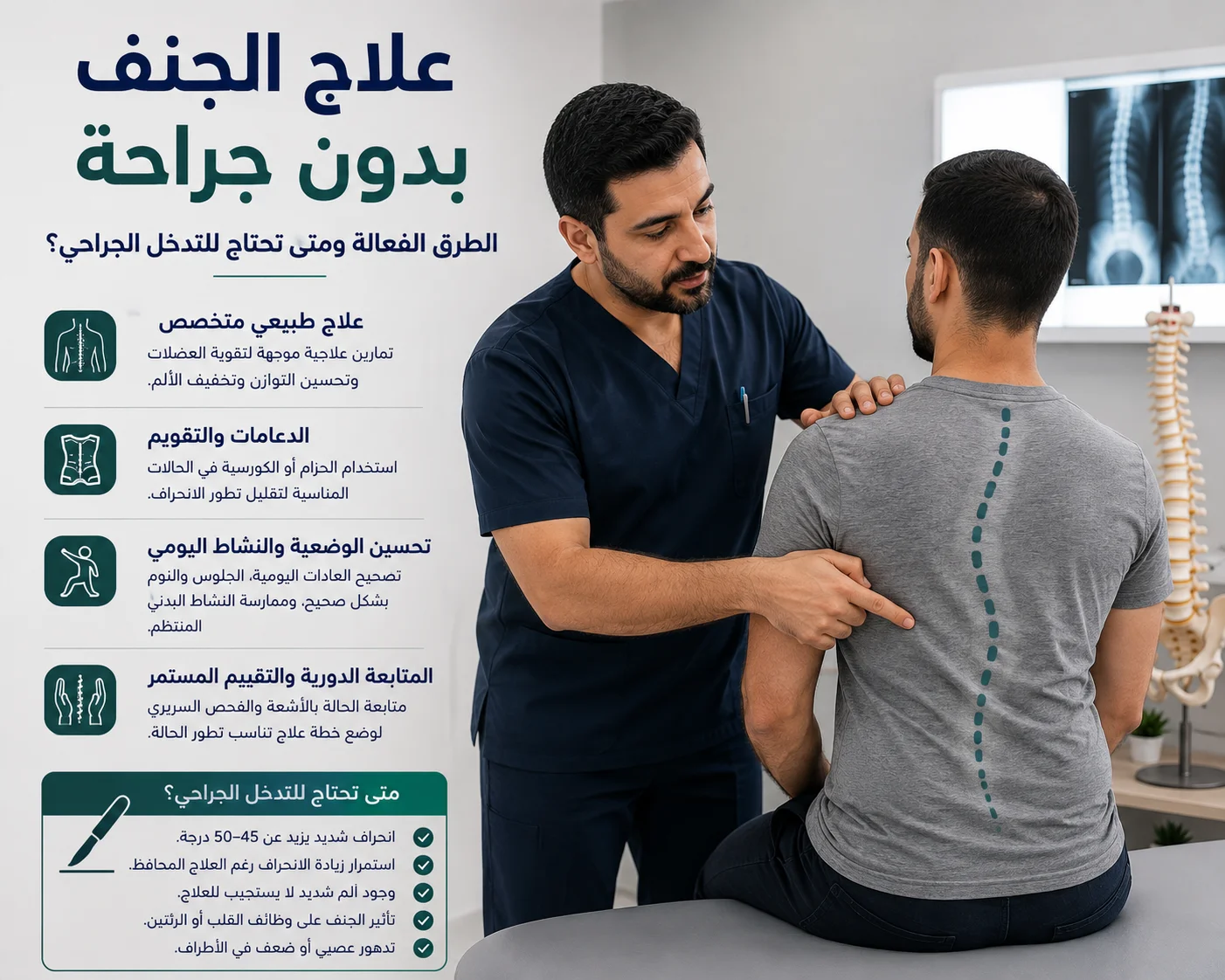
Scoliosis is a spinal disorder that causes an abnormal curvature of the spine. It can occur at different degrees, ranging from mild cases that only require monitoring to more advanced cases that may require more specialized treatment. Therefore, determining the appropriate treatment method depends on the degree of curvature, the patient’s age, and any associated symptoms.
Searching for non-surgical scoliosis treatment has become common among patients who want to understand their available options before considering surgery. In many cases, especially mild to moderate scoliosis, conservative treatment methods can help improve symptoms and monitor the progression of the condition.
Medical Disclaimer:
This article was medically reviewed by Prof. Dr. Mohamed Abdelbary, Professor and Consultant of Neurosurgery and Spine Surgery, to ensure the accuracy of the medical information provided.
What Is Scoliosis and How Does Spinal Curvature Develop?
Scoliosis is an abnormal sideways curvature of the spine that may also involve rotation of the vertebrae to varying degrees. Instead of appearing completely straight when viewed from behind, the spine may curve into a C or S shape.
The causes of scoliosis vary from one case to another. It may be idiopathic, especially in children and adolescents, or may result from congenital factors, neuromuscular conditions, or age-related changes in adults.
Difference Between Mild and Advanced Scoliosis
The severity of scoliosis varies according to the degree of curvature and its effect on the body. Mild scoliosis may not cause significant symptoms and may only require monitoring, while advanced cases can affect movement or cause pain and functional problems.
Doctors rely on clinical examination and imaging to determine the degree of curvature and select the most appropriate treatment approach for each patient.
Causes of Scoliosis in Children and Adults
Scoliosis may develop due to several factors, including:
-
Genetic or congenital factors.
-
Certain neuromuscular conditions.
-
Differences in limb length in some cases.
-
Degenerative changes in the spine with aging.
In many cases, particularly among children and adolescents, there is no clear cause, and the condition is known as idiopathic scoliosis.
Can Scoliosis Be Treated Without Surgery?
Yes, some cases of scoliosis can be treated without surgery, particularly when the curvature is mild or moderate and does not cause nerve compression or significant functional problems. The choice of treatment depends on the doctor’s assessment of the condition rather than the presence of pain alone.
Non-surgical treatment includes several options aimed at improving spinal function, reducing pain, maintaining stability, and preventing the condition from progressing.
Doctors consider several factors, including:
-
The patient’s age and stage of growth.
-
The degree of spinal curvature.
-
The rate at which the curvature is progressing.
-
Symptoms such as pain or limited mobility.
Mild Scoliosis Treatment Without Surgery
Mild scoliosis treatment can often involve monitoring and conservative care, particularly when there is no significant progression in the degree of curvature.
The goal of treatment in these cases is to maintain spinal health, improve mobility, and reduce any associated symptoms.
Regular Monitoring and Measuring Curvature Progression
Regular follow-up is an essential part of scoliosis management. Doctors evaluate the progression of the condition through physical examinations and imaging when necessary.
Not every case of scoliosis requires immediate treatment. A doctor may recommend observation when the condition is stable and there is no significant risk of increased curvature.
Physical Therapy and Muscle-Strengthening Exercises
Physical therapy can help improve the strength of the muscles surrounding the spine, increase flexibility, and improve body posture.
Exercises should be designed according to each patient’s condition because the appropriate exercises vary depending on the degree of curvature, the patient’s age, and existing symptoms.
Non-Surgical Scoliosis Treatment Options
Non-surgical treatment methods vary depending on the nature of the condition. Common options include:
-
Physical therapy to improve mobility and strengthen muscles.
-
Exercises designed to improve body posture.
-
Regular follow-up with imaging when required.
-
Bracing for some children and adolescents during growth.
-
Modifying certain daily habits that may increase discomfort or pain.
The primary goal of these methods is not only to reduce symptoms but also to maintain the best possible spinal function.
The Role of Physical Therapy in Improving Scoliosis Symptoms
Physical therapy plays an important role in helping many scoliosis patients, particularly those experiencing pain or reduced spinal flexibility.
Appropriate treatment programs can help:
-
Strengthen the back and abdominal muscles.
-
Improve balance and body posture.
-
Reduce muscle tightness and pain.
-
Improve mobility.
However, it is important to understand that physical therapy does not necessarily correct the spinal curvature completely. Instead, it aims to improve spinal function and reduce the impact of scoliosis on the patient’s daily life.
When Does a Scoliosis Patient Need Surgery?
Although many cases can be managed without surgery, some patients may require surgical evaluation when the curvature is severe or continues to progress.
The decision to recommend surgery is based on several factors and not solely on the degree of curvature.
Curvature Degrees That Require Surgical Evaluation
Cases with significant curvature or progressive changes are generally evaluated carefully, particularly when the condition affects the patient’s quality of life or causes noticeable symptoms.
The Effect of Scoliosis on Nerves and Movement
Symptoms such as limb weakness, movement problems, or signs of nerve compression require specialized medical evaluation to determine the most appropriate treatment.
Scoliosis Treatment in Children and Adults: Is the Approach Different?
The management of scoliosis varies according to the patient’s age and the nature of the condition. Children and adolescents require close monitoring because the spine is still growing, and the degree of curvature may change over time.
In adults, scoliosis may be associated with back pain or changes caused by spinal degeneration. Therefore, treatment often focuses on reducing pain, improving mobility, and maintaining spinal function.
The appropriate treatment always depends on an accurate diagnosis rather than age alone.
How Is Scoliosis Diagnosed Before Choosing Treatment?
Scoliosis diagnosis begins with a physical examination that helps the doctor assess the shape of the spine, body posture, and movement.
The doctor may also recommend tests such as:
-
X-rays to determine the degree of curvature.
-
Measurement of the curvature angle.
-
Evaluation of the condition of the vertebrae.
-
A neurological examination when related symptoms are present.
Accurate diagnosis is the first step toward choosing the appropriate treatment and avoiding unnecessary treatment methods.
Why Do You Need a Specialist Before Choosing Scoliosis Treatment?
Choosing a scoliosis treatment depends on many factors that vary from one person to another, so there is no single treatment suitable for every patient. Evaluation by a spine specialist helps determine the severity of the condition and identify the most appropriate treatment approach.
Prof. Dr. Mohamed Abdelbary is a Professor of Neurosurgery and Spine Surgery and a Consultant in minimally invasive spine surgery. He has more than 20 years of experience in diagnosing and treating various spinal conditions.
Book an Evaluation With Dr. Mohamed Abdelbary to Find the Right Treatment
Choosing the appropriate scoliosis treatment always begins with an accurate diagnosis. Some cases may only require monitoring, while others may benefit from specialized treatment programs or more advanced interventions.
If you have a spinal curvature or want to understand the best treatment options for your condition, you can schedule a medical evaluation with Dr. Mohamed Abdelbary to receive an accurate diagnosis and an appropriate treatment plan.
Frequently Asked Questions About Non-Surgical Scoliosis Treatment
Can scoliosis be treated without surgery?
Yes, some cases of scoliosis can be managed without surgery, particularly mild to moderate cases. The approach depends on the degree of curvature, the patient’s age, and the effect of the condition on the spine and mobility.
What is the treatment for mild scoliosis?
Treatment for mild scoliosis often involves medical monitoring, physical therapy, muscle-strengthening exercises, and posture improvement. The doctor determines the appropriate plan based on each patient’s condition.
Can back exercises treat scoliosis?
Back exercises do not completely treat all types of scoliosis, but they may help improve muscle strength, reduce pain, and improve mobility when appropriate exercises are performed under professional supervision.
When does scoliosis require surgery?
Scoliosis may require surgery when the curvature is severe, continues to progress, or causes problems affecting movement or the nerves. The final decision depends on the doctor’s evaluation of the individual case.
Does scoliosis get worse with age?
Scoliosis may progress over time in some cases, particularly when the curvature continues to develop or when changes occur in the spine. Regular medical follow-up is therefore important for monitoring the condition.
Suggested Articles
Locations of Spinal Cord Injuries
Hand Nerve Compression – Causes, Symptoms, and Treatment
Trigeminal Neuralgia Symptoms: Key Signs & Relief Options
Vertebroplasty: Reasons, procedures and expectations
