
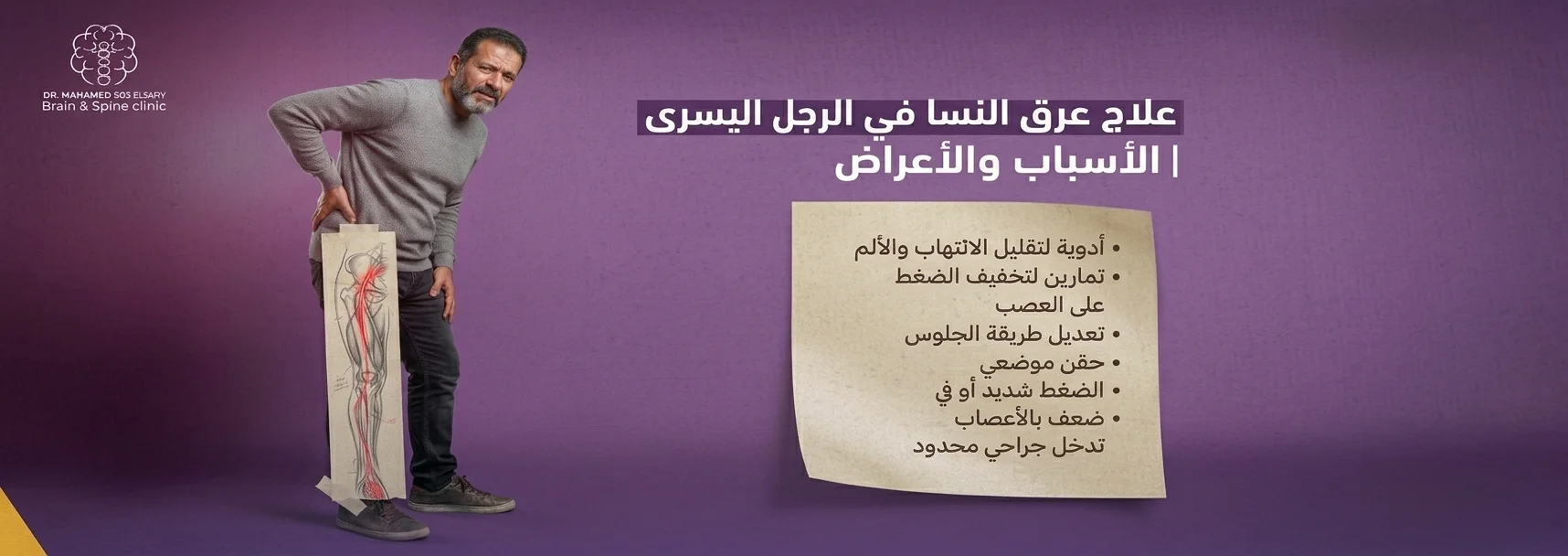
Sciatica in the left leg can cause pain that radiates from the lower back to the buttocks and leg. It may also be accompanied by numbness, tingling, or weakness in the affected limb. The severity of symptoms varies from one person to another, and treatment depends on the underlying cause of irritation or pressure on the sciatic nerve.
Therefore, treating sciatica in the left leg is not limited to painkillers. It begins with identifying the source of the problem through a medical evaluation and physical examination. In some cases, the doctor may recommend imaging tests. In this guide, we discuss the symptoms and causes of sciatica, how it is diagnosed, the main treatment options, when it can be treated without surgery, and when surgical intervention may become necessary.
This article has been medically reviewed by Dr. Mohamed Abdelbary.
Treatment of Sciatica in the Left Leg: What Is the Right Approach to Relieve Pain?
Treatment of sciatica in the left leg depends on the cause and severity of the symptoms, so there is no single treatment that is suitable for every case. In mild cases, symptoms may gradually improve with conservative treatment, which may include maintaining an appropriate level of activity, avoiding prolonged bed rest, and using warm or cold compresses, along with medication or physical therapy according to the doctor's assessment.
If the pain persists or worsens, or if it is accompanied by numbness or weakness in the leg, the patient may need a more thorough medical evaluation to determine the cause of nerve compression and choose the appropriate treatment. In some cases, injections around the affected nerve may be used, while surgery may be considered when there are indications for it, such as severe or progressive weakness or persistent pain despite non-surgical treatment.
Therefore, the best first step for relieving left leg pain is to identify the underlying cause and then develop a treatment plan suited to the patient's condition and examination findings, rather than relying on a single home remedy for every case.
What Is Sciatica in the Left Leg and What Are Its Symptoms?
Sciatica is pain caused by irritation or compression of the sciatic nerve, the largest nerve in the human body. It extends from the lower back through the buttocks to the back of the leg. When this nerve is affected on the left side, symptoms may occur in the left leg and extend from the lower back to the foot.
Symptoms of sciatica vary from one case to another and may include:
-
Pain that starts in the lower back or buttocks and extends into the left leg.
-
Tingling or numbness in the leg or foot.
-
A burning sensation or electric-shock-like pain along the path of the nerve.
-
Weakness in the leg muscles or difficulty moving the foot in some cases.
-
Increased pain after sitting for long periods or during certain movements such as bending, coughing, or sneezing.
Pain in the left leg does not necessarily mean that a person has sciatica, as similar symptoms can occur with other spinal or muscular conditions. Therefore, an accurate diagnosis depends on evaluating the symptoms and performing the appropriate examination to determine the cause of the pain and develop the right treatment plan for sciatica in the left leg.
What Causes Sciatica in the Left Leg?
Sciatica in the left leg occurs when the sciatic nerve becomes irritated or compressed. The cause is often related to problems in the lower back that affect the path of the nerve. The underlying cause varies from one person to another depending on the condition affecting the spine or surrounding tissues.
Common causes of sciatica include:
-
Herniated disc: One of the most common causes. A herniated disc can put pressure on the roots of the sciatic nerve, resulting in pain that radiates into the left leg.
-
Spinal stenosis: This occurs when the space through which the nerves pass within the spinal canal becomes narrower, potentially causing nerve irritation or compression.
-
Age-related changes: These may include disc degeneration or the development of bone spurs that can affect the nerves.
-
Spinal injuries or strain: Certain incorrect movements or injuries may put pressure on nerves in the lower back.
-
Spasm of muscles surrounding the nerve: In some cases, muscular problems may irritate the sciatic nerve and cause similar symptoms.
How Is Sciatica Diagnosed and the Cause of Pain Identified?
Diagnosing sciatica involves identifying the underlying cause of the pain rather than simply determining where the pain is located. The doctor begins by carefully evaluating the symptoms, including the nature of the pain, where it radiates, and whether it affects movement, muscle strength, or sensation in the left leg.
Steps for Diagnosing Sciatica
-
Medical history: The doctor asks about when the pain started, how long it has lasted, what makes it better or worse, and whether there is numbness or weakness in the leg.
-
Physical examination: Muscle strength, reflexes, and sensation in different areas of the leg are assessed. The doctor may also perform specific tests to determine whether the sciatic nerve is affected.
-
Imaging tests: The doctor may recommend tests such as an MRI of the lumbar spine, particularly when symptoms persist or there are signs suggesting nerve compression.
-
Identifying the source of compression: Based on the medical history, examination, and test results, the doctor determines the most likely cause, whether it is a herniated disc, spinal stenosis, or another spinal condition.
What Are the Best Treatments for Sciatica in the Left Leg?
The best treatment for sciatica in the left leg is determined according to the underlying cause, severity of symptoms, and condition of the affected nerve. Treatment therefore varies from one person to another. Some cases improve with non-surgical treatment, while others may require more specialized interventions when there is significant nerve compression.
Main Treatment Options for Sciatica
-
Medication: The doctor may prescribe medications to help reduce pain and inflammation or relieve associated symptoms, depending on the patient's condition.
-
Physical therapy: Physical therapy can help improve muscle flexibility, strengthen the back muscles, and improve movement while teaching the patient positions and movements that reduce pressure on the nerve.
-
Modifying daily activities: This may include avoiding movements that increase pain while maintaining an appropriate level of activity instead of prolonged rest, which can increase muscle stiffness.
-
Therapeutic injections: In some cases, injections around the nerve roots may be used to reduce inflammation and pain when considered appropriate for the patient's condition.
-
Surgical intervention: Surgery may be considered when there is significant nerve compression causing progressive weakness or when symptoms do not improve despite appropriate non-surgical treatment.
The goal of treatment is not only to relieve pain but also to address the underlying cause of sciatic nerve irritation and restore better mobility. Therefore, the treatment plan should be based on an accurate diagnosis and examination by a specialist in spinal surgery.
Can Sciatica Be Treated Without Surgery?
Yes, many cases of sciatica can be treated without surgery, particularly when symptoms are caused by mild irritation or limited compression of the sciatic nerve. The success of non-surgical treatment depends on identifying the underlying cause and following an appropriate treatment plan recommended by the doctor.
Non-surgical treatment options include:
-
Physical therapy: It can help improve spinal movement and strengthen the muscles supporting the back while reducing pressure on the nerve.
-
Appropriate medications: The doctor may prescribe medications to reduce pain and inflammation or manage symptoms depending on the patient's condition.
-
Modifying daily habits: This may include avoiding positions that worsen the pain and maintaining appropriate movement instead of prolonged rest.
-
Therapeutic exercises: Certain targeted exercises may help improve flexibility and reduce the recurrence of symptoms when they are appropriate for the patient's condition.
-
Therapeutic injections: These may be an option for some patients to help reduce inflammation around the nerve and relieve pain.
However, not needing surgery does not mean that persistent symptoms should be ignored. If there is significant weakness in the leg muscles, increasing loss of sensation, or persistent pain despite appropriate treatment, the patient should consult a specialist for further evaluation and to determine the most appropriate treatment option.
The goal of treating sciatica in the left leg is to address the underlying cause and restore nerve function, rather than simply providing temporary pain relief.
Book an Appointment for Sciatica Treatment with Dr. Mohamed Abdelbary
If you are experiencing sciatica pain in the left leg or symptoms such as numbness, tingling, or leg weakness, an accurate diagnosis is the first step toward choosing the appropriate treatment.
Dr. Mohamed Abdelbary, Lecturer of Neurosurgery and Spine Surgery and Consultant Spine Surgeon, has specialized experience in diagnosing and treating spinal conditions and nerve compression.
Book your appointment now to receive a specialized medical evaluation and learn about the treatment options that may be appropriate for your condition.
Frequently Asked Questions
Does sciatica cause pain only in the left leg?
Sciatica symptoms can occur in either the left or right leg, depending on which nerve or nerve root is affected. Pain may extend from the lower back or buttocks into the leg and foot.
How long does sciatica treatment take?
The treatment duration varies from one case to another depending on the underlying cause, severity of nerve compression, and the patient's response to treatment. Some cases improve with non-surgical treatment, while others may require further evaluation or additional intervention.
Can sciatica in the left leg be treated at home?
Some simple measures, such as maintaining appropriate activity and avoiding positions that worsen the pain, may help relieve symptoms. However, persistent pain or the presence of numbness or weakness requires medical evaluation to identify the cause and determine the appropriate treatment.
When is sciatica considered serious?
The patient should seek prompt medical evaluation if they develop progressive weakness in the leg, significant loss of sensation, difficulty controlling urination or bowel movements, or numbness in the area between the thighs.
Does every case of sciatica require surgery?
No. Many cases can be treated with non-surgical methods such as medication, physical therapy, and modifying daily activities. Surgery is considered in specific cases when there is significant nerve compression or symptoms fail to improve despite appropriate treatment.
Is an MRI necessary to diagnose sciatica?
Not necessarily in every case. The doctor initially relies on the symptoms and physical examination. An MRI or other imaging tests may be recommended when the doctor needs to identify the cause of nerve compression, when symptoms persist, or when there are signs that require further evaluation.
Suggested Articles

Locations of Spinal Cord Injuries

Hand Nerve Compression – Causes, Symptoms, and Treatment

Trigeminal Neuralgia Symptoms: Key Signs & Relief Options
Vertebroplasty: Reasons, procedures and expectations
